21 · Page 186 of 219
The Steve Irwin Standard
The Wildlife Warrior who taught the world to love what it feared
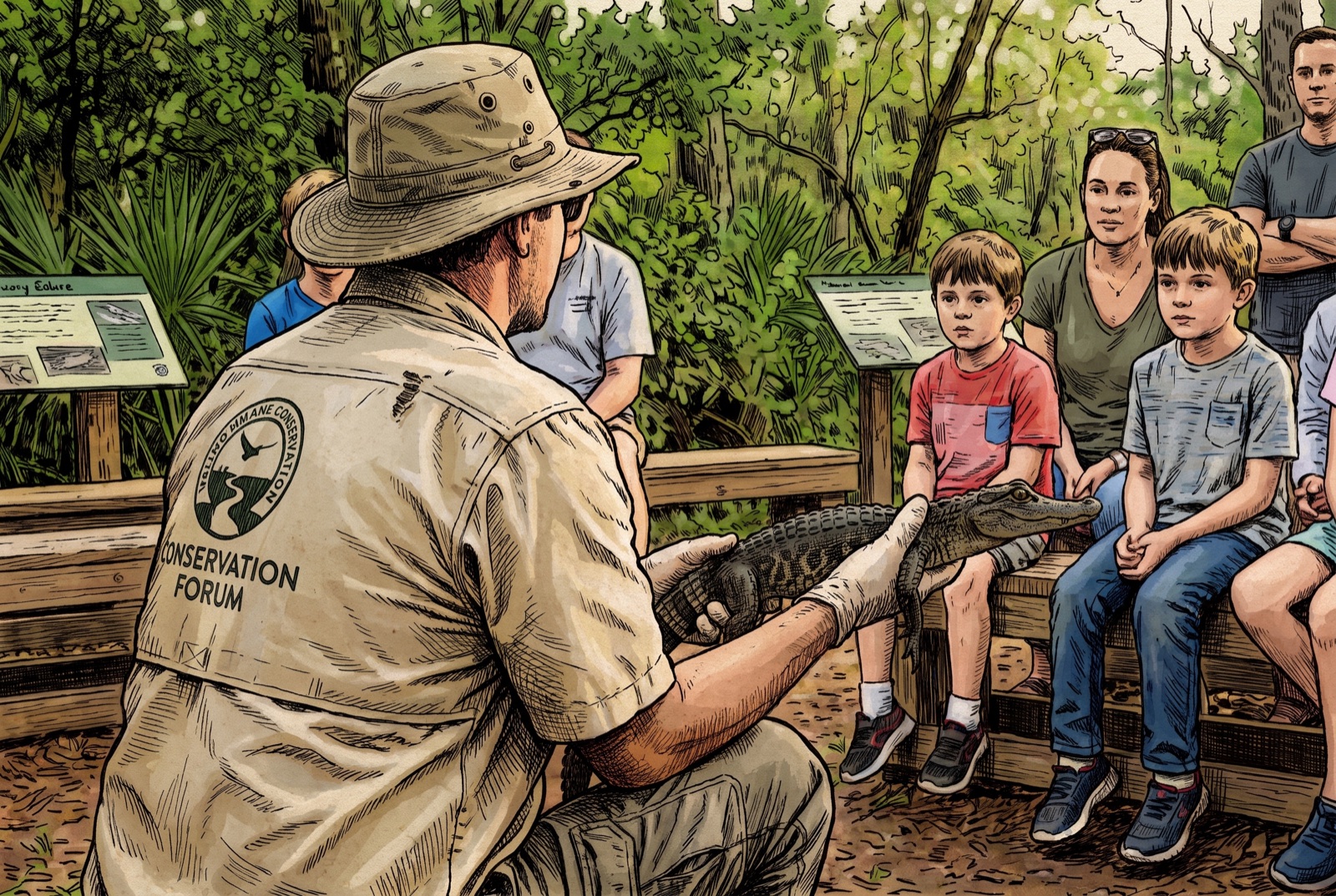
No single person did more to change how the world sees crocodilians than Steve Irwin. Nobody is close. To talk about being croc wise without talking about him would leave out the reason any of it stuck. Steve’s entire life was the argument this book is making, lived out loud in front of a global audience.
Who he was
Stephen Robert Irwin (1962–2006) grew up among reptiles at his family’s small wildlife park in Queensland, taught about crocodilians by his father from boyhood. Literally raised in it. He took over the park, expanded it into Australia Zoo, and through the television series The Crocodile Hunter became one of the most recognizable people on the planet. The khaki-clad Australian with the boundless enthusiasm, crouched beside animals most people would run from, shouting “Crikey!” with undisguised joy. He died in 2006 in an accident while filming on the Great Barrier Reef. The world mourned him as few wildlife figures have ever been mourned, and his family, Terri, Bindi and Robert, carry his work forward to this day.
His mission
Steve’s fame was never the point. He disliked it. And he used every bit of it as fuel. He called himself a Wildlife Warrior, and he meant it as a job description: “My mission is to save the world’s endangered species.” With Terri he founded the conservation charity that became Wildlife Warriors Worldwide, poured the money from filming and merchandise back into conservation, built the Australia Zoo Wildlife Hospital that treats thousands of native animals a year, and bought vast tracts of land as private reserves, the 330,000-acre Steve Irwin Wildlife Reserve in Cape York chief among them. He began serious crocodilian research in the 1980s, and the capture-and-release techniques he developed are still used by scientists today to tag and study wild saltwater crocodiles. His vision, in his own words and his family’s, was a world where people and wildlife could live alongside one another.
What made it work
What made Steve Irwin extraordinary was not stunts. It was authenticity. He did not lecture people into caring about wildlife; he infected them with his own genuine, unembarrassed love for it. “I believe that education is all about being excited about something,” he said. “Seeing passion and enthusiasm helps push an educational message.” His mission statement for Australia Zoo, “Conservation Through Exciting Education,” captures the whole method: get people excited about an animal, and you make it a great deal easier to save that animal.
That is exactly the spirit this book tries to honor. Not fear. The goal is to make you respect them enough to keep your distance and value them enough to want them protected. Steve drilled, again and again, the idea that runs through these pages: that these animals are magnificent, that losing them would be a real loss, and that it is our job, ours, the clever, dominant, responsible species, to find ways to coexist with them rather than wipe them away. He was, and remains, the global standard for what it looks like to love wildlife out loud and to back that love with action.
In our view, Steve Irwin was the greatest wildlife warrior who ever lived. No one has done more to change how the world perceives animals, to show people that creatures they were taught to fear are in fact magnificent, and that they deserve our respect and our protection. No one drew more people onto the conservation mission, or did it with more joy and more heart. And the lesson he repeated above all others is the one at the center of everything we do: that the key to conservation is education. Education. That is precisely why this book pushes education so hard. If you want to save an animal, first help people understand it and love it. Teach the danger and the wonder together. That was Steve’s way, and it works.
“So if we can get people excited about animals, then by crikey, it makes it a heck of a lot easier to save them.”
You can’t ask a hungry family to save a crocodile
Steve understood something that sits underneath all of this, and it carries to the rest of the world. Conservation is impossible where survival is not secure. Food first. A person with an empty stomach, lying awake over how they will feed their children tomorrow, cannot be asked to care about saving a species, and it is unfair, even cruel, to expect them to. Survival comes first; it always has. In the wealthy world we can afford to treat wildlife as a matter of ethics and beauty. For much of the planet, the fishing villages of the Zambezi, the river communities of Borneo, the families who must cross a crocodile-holding ford to reach a school or a market, the animal at the water is a daily question of life and death, and no lecture about biodiversity will change that arithmetic. If we want people to protect dangerous wildlife, we first have to make it possible for them to live.
And it runs both ways, which is the part people miss. When a community has no other way to eat, it fishes a river to the bone, and every fish pulled out is a fish the crocodiles were living on. To the bone. Strip enough of it away and the animals start to starve. A starving apex predator does not politely move on. It turns to whatever prey is left, and at that river’s edge, that is people. The attacks that follow are not the animal being evil. They are the animal being hungry, in a place where we quietly took its food. Which means the real fix is not more culling. It is mending the thing underneath: the well that means a family no longer has to draw water where the crocodiles wait, the fishery managed so there is enough to go around, the footbridge that keeps children out of the ford. Close the infrastructure gap and you head off the tug-of-war before it starts, and it is always the animals that lose that war in the end. This is the work Citadel Culebra and the projects around it intend to back, not from a distance, but with real initiatives aimed straight at it.
That is why the conservation that actually lasts is inseparable from human development. We mean a specific kind. Not hotels or resorts or tourist strips. We mean community infrastructure: clean water and wells, so families are not forced to draw from a crocodile’s river; clinics and hospitals; homes and schools; safe crossings, footbridges and barriers; and the patient improvement of what already exists, so that people and wildlife can share a landscape without colliding at the water’s edge every single day. Until a community’s basic needs are met, there will be conflict, and the animals lose that conflict in the end. Meet those needs, and coexistence stops being a slogan and becomes something a place can actually do.
This is what Citadel Culebra is working toward, and the reason a field-safety guide talks about it at all. Our mission is to teach people how to stay alive around these animals, and to keep saying, loudly and often, that the two struggles are one struggle, and to back initiatives that lift human lives and animal lives at the same time. When you build the well, the clinic, the school and the safe crossing, the people are safer and so are the animals, because a person who is not driven into the water is not a person the crocodile ever meets. Improve human life the right way, and the wildlife directly benefits. Both win. That is the coexistence Steve Irwin believed in, carried one step further: love the animal, yes, and build the world in which loving it is affordable.
To be croc wise is, in the end, to take up a small corner of Steve Irwin’s mission: to share the country with crocodilians, safely and gladly, to hand that ethic on to the next generation, and, wherever we can, to help build the conditions in which people and wildlife both get to thrive. A small corner. Every family that learns these rules, respects the water, and teaches their children to do the same is, in its own quiet way, carrying the Wildlife Warrior’s torch.