
35 · Page 257 of 364
Why Culling Fails, and What Works
Keystone predators and the balance of needs
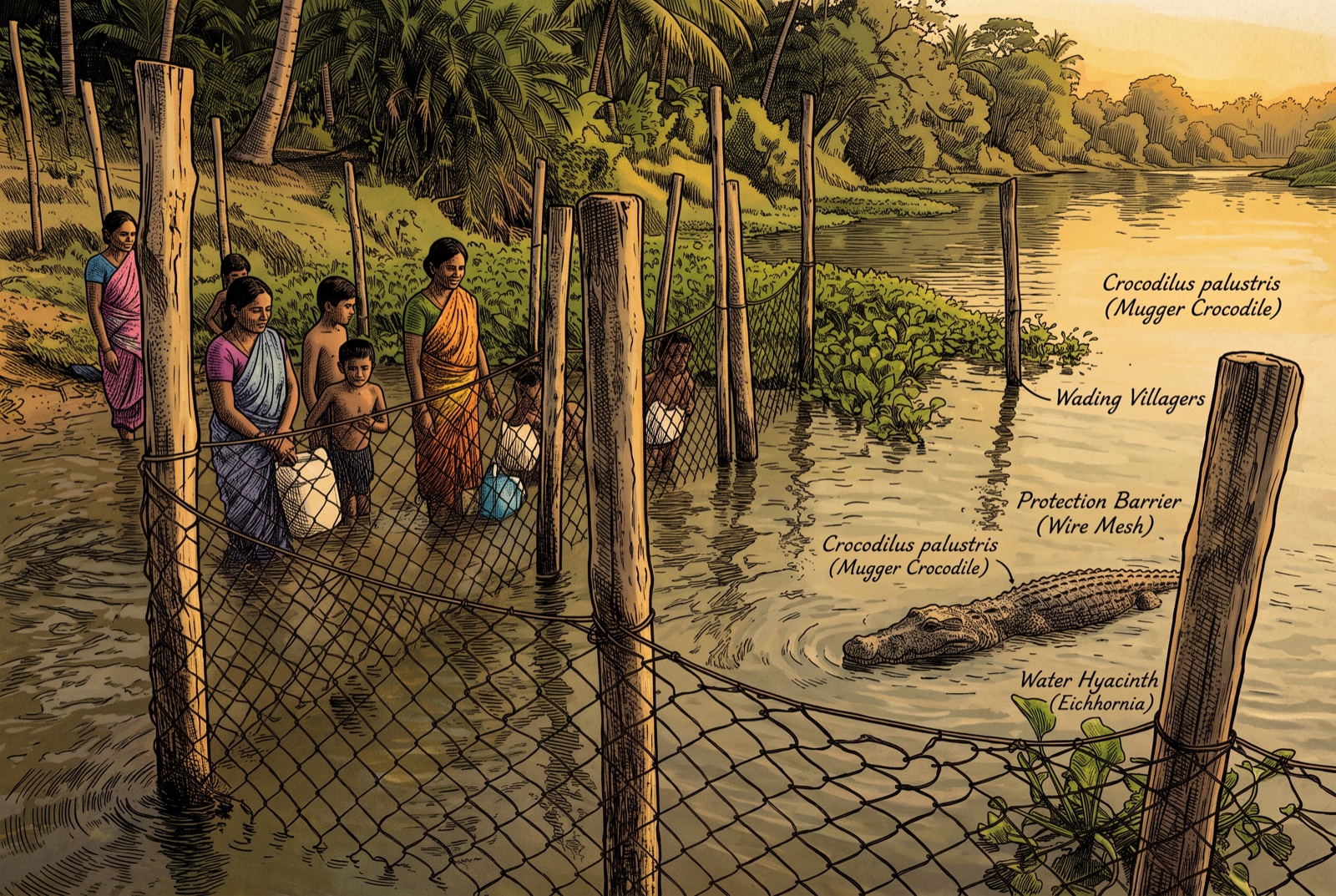
When a crocodile takes a human life, the demand that follows is as predictable as grief itself: kill them, thin them out, make the water safe by emptying it of the animal. It is an understandable response, and it is the wrong one, not on sentimental grounds but on the hard evidence of the numbers. And it is not even the easy shortcut it looks like. Far from it. Culling crocodiles is dangerous, slow, and hungry for manpower and money, and at the end of all that effort the attacks keep coming. The reach for the rifle is a brutish reflex, the answer people land on when they cannot see another way. The data is now clear enough that anyone proposing a cull as a safety measure is arguing against the science.
What the evidence actually shows
The most careful recent work is Baker and colleagues' 2024 study in the journal People and Nature, which examined seventy-six crocodile attacks in the Northern Territory across the years 1979 to 2022. Its central finding is quietly devastating to the pro-cull argument: crocodile density is a poor predictor of how often attacks occur. More crocodiles in a stretch of water does not straightforwardly mean more attacks, and fewer crocodiles does not straightforwardly mean fewer, because attacks are driven far more by human behaviour than by raw animal numbers. Behaviour, not headcount.
Free preview
Own the whole book — $4.99
You’re reading the free preview of Croc & Gator Wise: The American Edition. 8 more sections are in this chapter — unlock the full field guide to keep reading.
- The complete master — both the American and Australian editions
- Reads on any device · adds to your home screen like an app
- One-time purchase · lifetime access
A Citadel Culebra field safety guide · Vivarium Culebra LLC