
28 · Page 216 of 364
India's Other Coast
The saltwater crocodile, the islands, and the danger no brochure prints
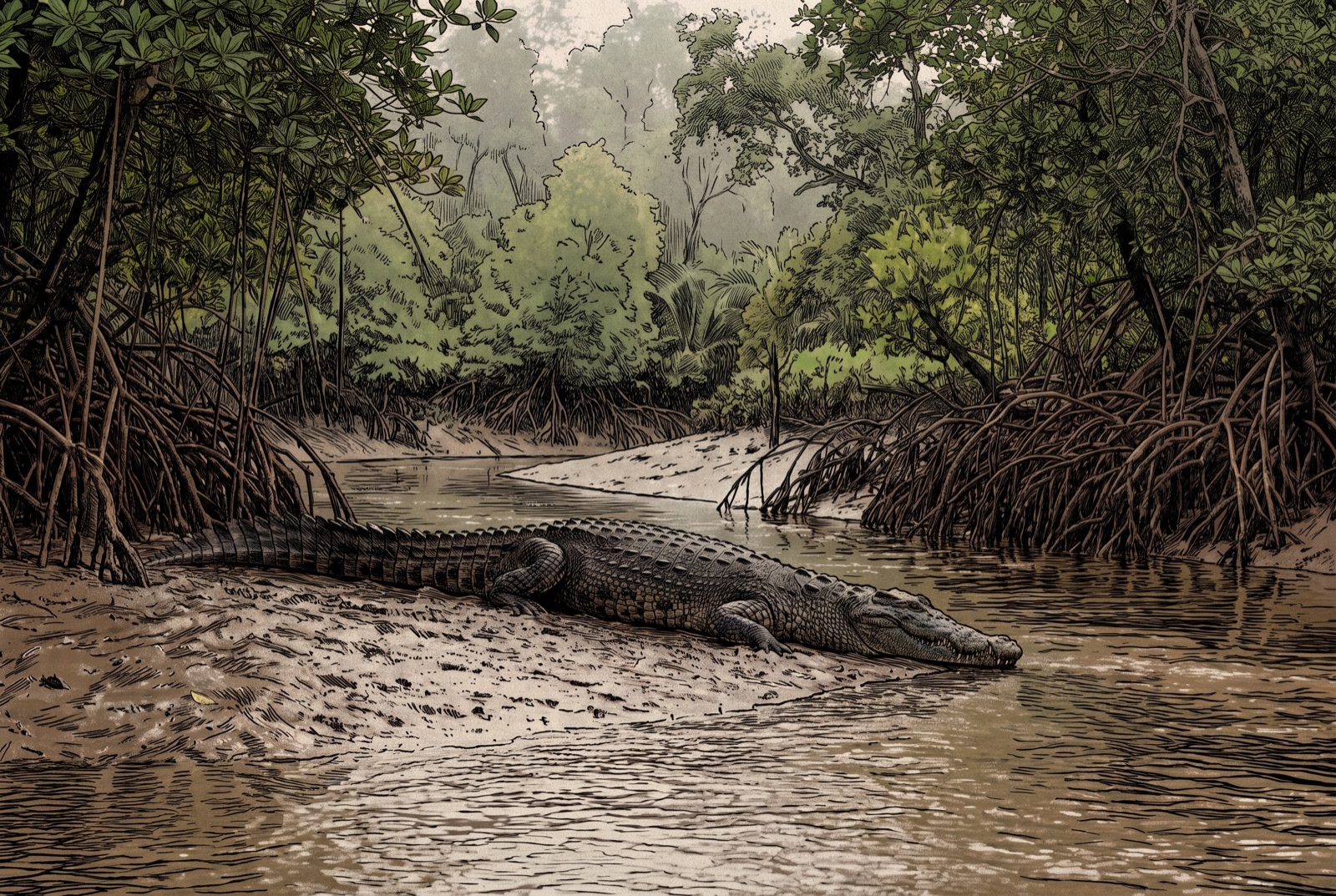
The subcontinent chapters kept to inland water: the mugger in its ponds and city rivers, the gharial in its shrinking channels. But India has a second crocodile country, and it belongs to the giant of this whole book. Down the eastern seaboard and out into the Bay of Bengal, the saltwater crocodile holds a coast most travellers never think to associate with it, and the fight over that coast is quieter and stranger than anything in Indonesia. Here the problem is not that no one is protected. It is that someone decided protection was bad for business. Bad for bookings.
The delta and the stronghold
The saltie's Indian range runs along the east coast and peaks in two places. The first is the Sundarbans, the vast tidal mangrove forest where the Ganges and the Brahmaputra empty into the sea, shared between the Indian state of West Bengal and Bangladesh. It is textbook saltwater-crocodile habitat, a labyrinth of brackish creeks and mudbanks, and the people who fish and gather honey in it share the water with both crocodiles and tigers, which is a sentence that ought to stop you for a moment. Read it again. The second is Bhitarkanika, in Odisha, a mangrove system holding one of the densest saltie populations in the country and some genuinely enormous animals. It is a conservation success and a conflict zone at once. In the space of about fifteen years, some fifty-seven people were attacked by crocodiles in and around the park.
Free preview
Own the whole book — $4.99
You’re reading the free preview of Croc & Gator Wise: The American Edition. 11 more sections are in this chapter — unlock the full field guide to keep reading.
- The complete master — both the American and Australian editions
- Reads on any device · adds to your home screen like an app
- One-time purchase · lifetime access
A Citadel Culebra field safety guide · Vivarium Culebra LLC