6 · Page 43 of 236
Where They Live, and Why Still Water Is Not Safe
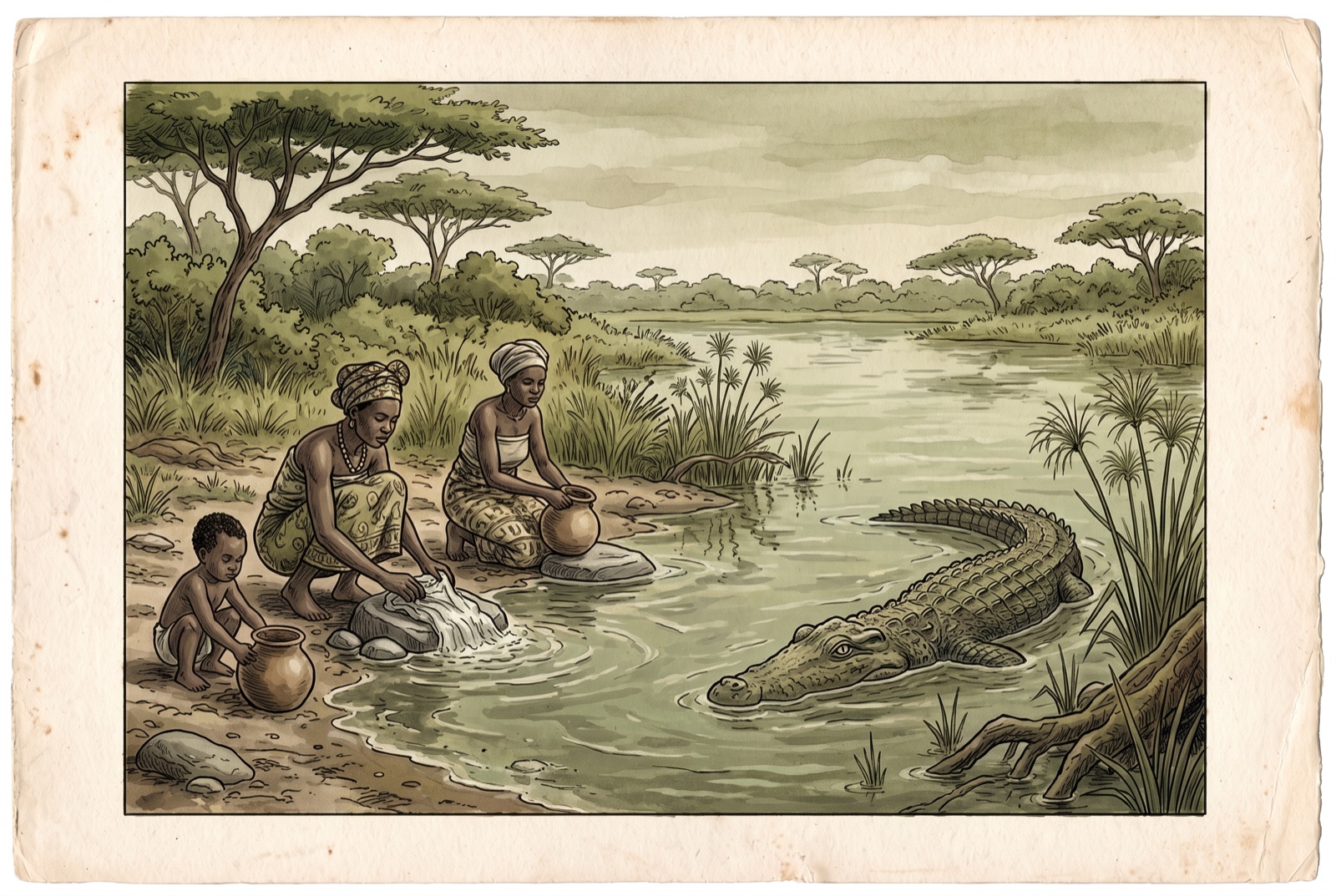
The Nile crocodile is not fussy about its address. Not at all. It thrives in the great rivers and the shallow lakes, in reed-choked swamps and seasonal floodplains, in irrigation channels and farm dams and the muddy margins of a village water hole. It tolerates brackish water and pushes down into coastal estuaries and mangrove creeks; large individuals will even move along the sea. Wherever there is water enough to hide in and prey enough to feed on, across an enormous swathe of Africa, the crocodile can make a living. This adaptability is exactly why no simple map can tell you that a given piece of water is safe.
You cannot tell by looking
A dangerous instinct people bring to the water's edge is the belief that danger announces itself. It does not. A crocodile at rest shows almost nothing: the eyes and nostrils sit flush with the surface, and often even those are withdrawn. In muddy or reed-fringed water, which is to say most African water, a large animal can lie a few metres from a wading child and be completely invisible. Clear water is no guarantee either; crocodiles rest on the bottom and move into the shallows to hunt. The absence of a crocodile you can see is not evidence of safety. It is simply the normal condition of crocodile habitat.
Free preview
Own the whole book — $4.99
You’re reading the free preview of Croc & Gator Wise: The American Edition. 10 more sections are in this chapter — unlock the full field guide to keep reading.
- The complete master — both the American and Australian editions
- Reads on any device · adds to your home screen like an app
- One-time purchase · lifetime access
A Citadel Culebra field safety guide · Vivarium Culebra LLC