10 · Page 75 of 236
The Wet Season
How the rains rewrite the map of danger
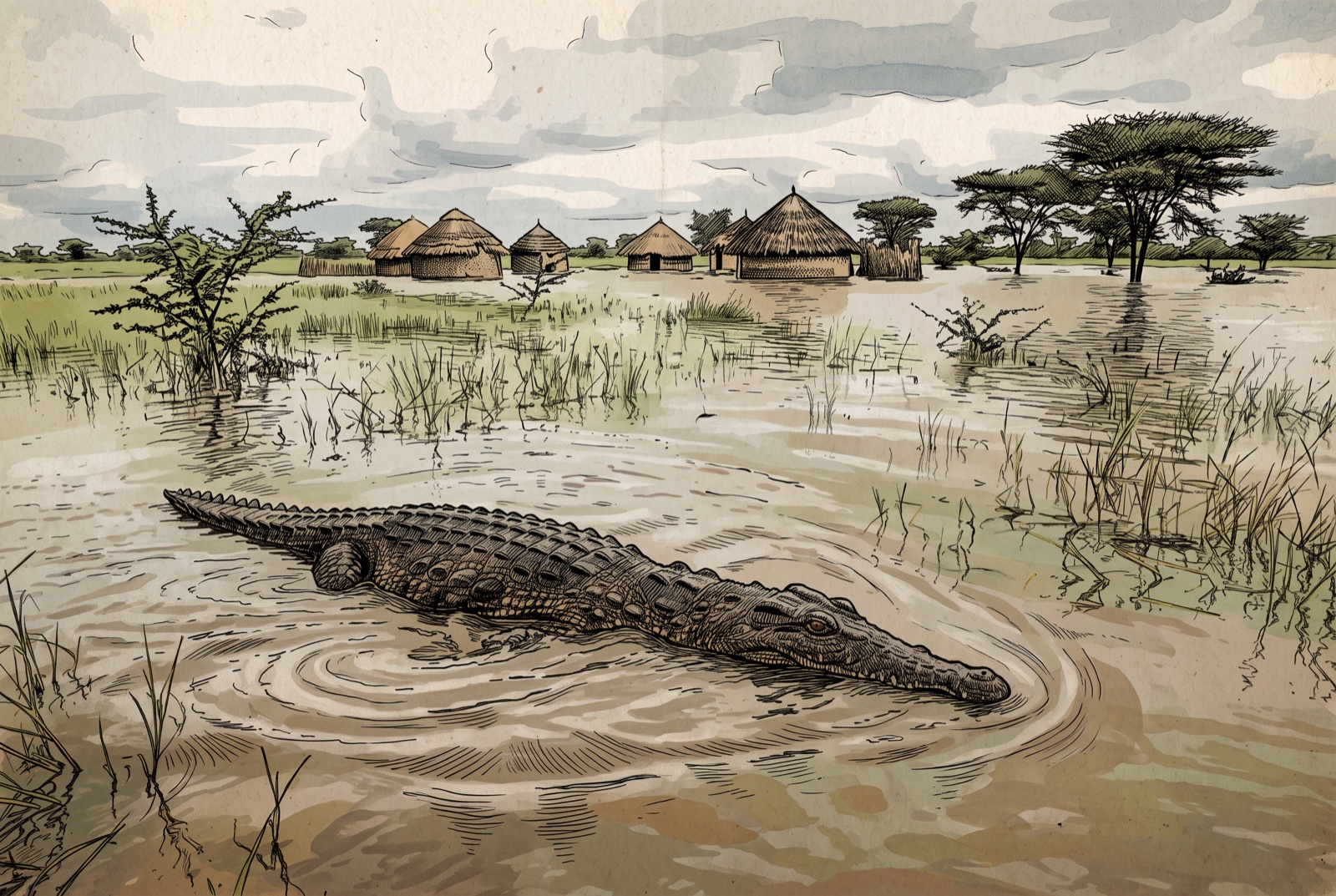
The rains change everything, and not in the way people expect. For much of the year a village knows exactly where its crocodiles are. They are in the river, in the deep bends, in the reed beds along the permanent water, and daily life is arranged around that knowledge. Then the wet season arrives, the rivers rise and spill their banks, and the map everyone has memorised is quietly redrawn. Redrawn overnight. Water goes where it has never been. And the Nile crocodile (Crocodylus niloticus), which follows water the way a shadow follows a body, goes with it.
When the water spreads, so do they
A crocodile is not trying to reach people. It is trying to reach water, food and warmth, and in the wet season all three lead it toward the places people live. When the Zambezi and the Limpopo and the rivers feeding the Rift lakes come up, they flood grazing land, gardens, footpaths and roads, and the fish move out across the new shallows to feed and breed. The crocodile follows. Higher water lets it disperse far more widely than the dry-season channel ever allowed, and every stretch of new water is a place where a person and a crocodile might now meet that never could before. Simon Pooley and colleagues, examining the record of attacks in South Africa and eSwatini for the journal Oryx in 2019, found the bites clustered heavily in the hot, wet summer months, roughly December through March, when the water is high and the animals are at their most active.
Free preview
Own the whole book — $4.99
You’re reading the free preview of Croc & Gator Wise: The American Edition. 6 more sections are in this chapter — unlock the full field guide to keep reading.
- The complete master — both the American and Australian editions
- Reads on any device · adds to your home screen like an app
- One-time purchase · lifetime access
A Citadel Culebra field safety guide · Vivarium Culebra LLC