38 · Page 276 of 364
The Attacks, in Full
Ten cases, told once, in as much detail as the record allows
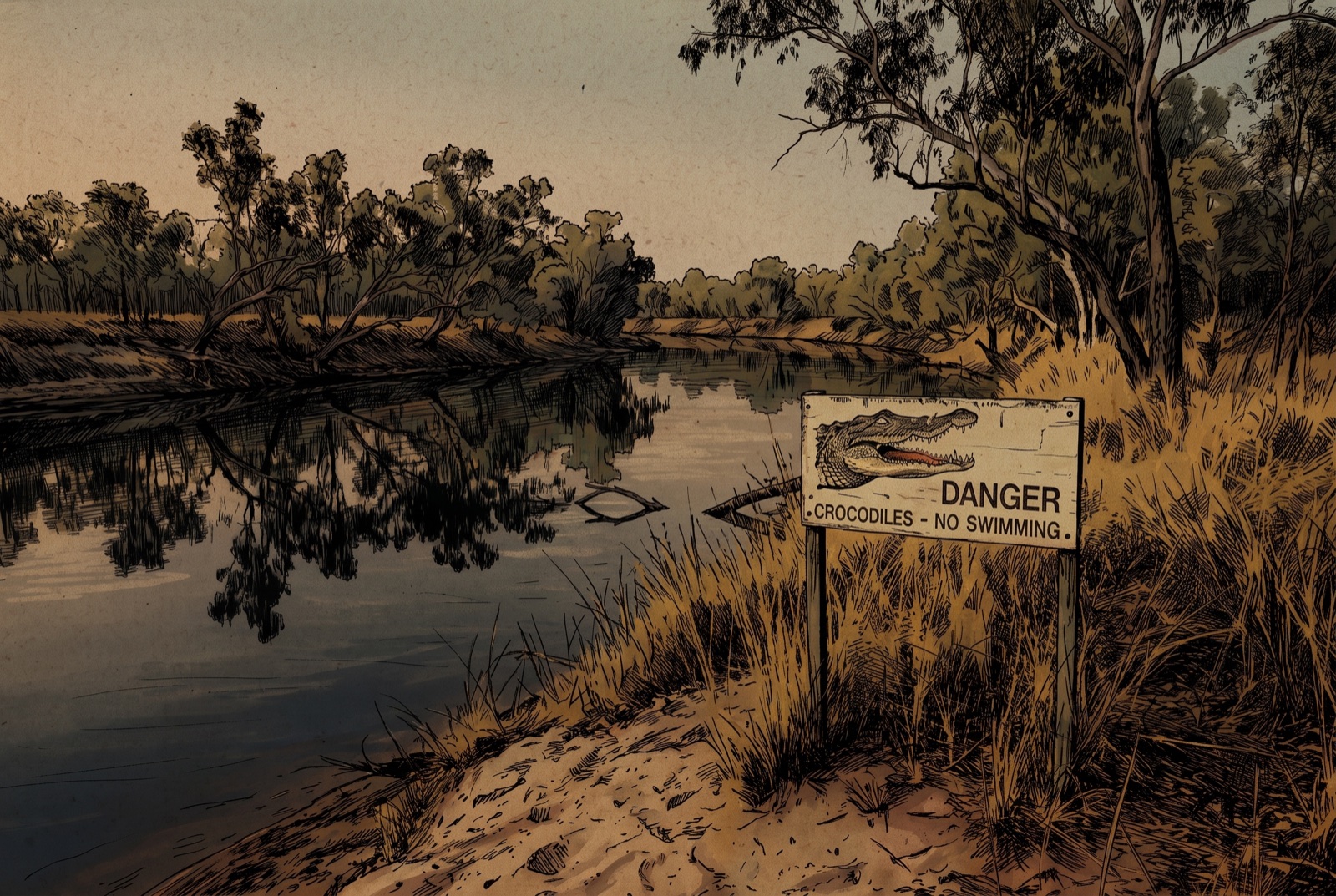
Ten cases follow. Four are Australian and six come from the wider region, and that ratio is deliberate, because it is roughly the ratio of the dying. Across the decade to 2024 the CrocAttack database logged 74 crocodile attacks in Australia, 11 of them fatal. Indonesia logged 179 attacks and 92 deaths in 2024 by itself, ahead of every other country on the record, and Sideleau, who keeps that record, says the real figures for that year are probably nearer 200 attacks and 120 deaths, because Papua and West Papua barely report at all. One year, one country. Use his caveat rather than the headline number. The Australian four come first here for one reason only — they are the cases with coronial findings, sworn evidence, named rangers and a paper trail you can go and check for yourself.
No lessons are drawn in this chapter. That is the next one's job. What is here is the hour, the light, the tide or the season, what the person was doing and why they were doing it, who else was there, whether there was a warning, what the animal did, who came, what the hospital found, what happened to the crocodile, and what a court or a coroner said afterwards. Where two sources disagree, both are given. Where nobody measured the animal, no size appears.
Val Plumwood, 45, East Alligator Lagoon, Kakadu, February 1985
Val Plumwood was an Australian philosopher, and in February 1985 she was camped at the East Alligator ranger station in Kakadu National Park on the first day of the monsoon. A ranger named Greg Miles lent her an open fibreglass canoe. The work was to scout a proposed walking trail. Nobody went with her. On the day it happened she went out alone to look for a rock art site, up a side channel off the lagoon, while the rain built from drizzle into a driving downpour.
She wrote the account herself, in an essay called Being Prey, and it is better than anything anyone has written about a crocodile attack since. So most of what follows is hers. "I saw in midstream what looked like a floating stick," she wrote. "As the current moved me toward it, the stick developed eyes. A crocodile!" Read that again, because it gets told backwards constantly. She did not mistake a stick for a crocodile. She mistook the crocodile for a stick, and the thing that corrected her was a pair of eyes appearing where no eyes should be.
Then it hit the canoe. "I was totally unprepared for the great blow when it struck the canoe. Again it struck, again and again, now from behind." She steered for the bank and jumped, deliberately, for an overhanging paperbark branch. She did not capsize and she was not tipped in. "Before my foot even tripped the first branch, I had a blurred, incredulous vision of great toothed jaws bursting from the water." It took her out of the air. It let her go. She went for the same branch a second time and it took her a second time, out of the air again, and that second leap produced the third of three death rolls she describes in her own text.
Her left thigh was laid open with, in her words, "bits of fat, tendon, and muscle showing." The first hold had done damage to her groin, and she credited her walking shorts with limiting it. There was a third bite to the upper left thigh. She had gouged at the animal's eyes while it held her and recorded exactly what that achieved: "the crocodile did not so much as flinch." It released her each time on its own account, not because she made it. She was very clear about that and so is this book.
She got herself up the bank, tourniqueted the thigh with a strap, and walked and staggered roughly three kilometres. "After several hours, I began to black out and had to crawl the final distance to the swamp's edge." Getting her to Darwin Hospital took thirteen hours by boat and then by road. There was no helicopter. She spent about a month in intensive care, took extensive skin grafts, and at one point an infection put the leg at risk of amputation.
The crocodile was never hunted, and that was her doing. "My rescuers discussed going upriver the next day to shoot a crocodile," she wrote. "I spoke strongly against this plan: I was the intruder." Parks recalled every canoe afterwards. Hers is in the National Museum of Australia. No length is given for the animal anywhere in this chapter because she said it "did not look like a large one," and because she named size exaggeration as the thing the retellings of her own story always did to it.
Free preview
Own the whole book — $4.99
You’re reading the free preview of Croc & Gator Wise: The American Edition. 63 more sections are in this chapter — unlock the full field guide to keep reading.
- The complete master — both the American and Australian editions
- Reads on any device · adds to your home screen like an app
- One-time purchase · lifetime access
A Citadel Culebra field safety guide · Vivarium Culebra LLC