
39 · Page 307 of 364
The Attacks, Analysed
What each one turned on, and what all ten have in common
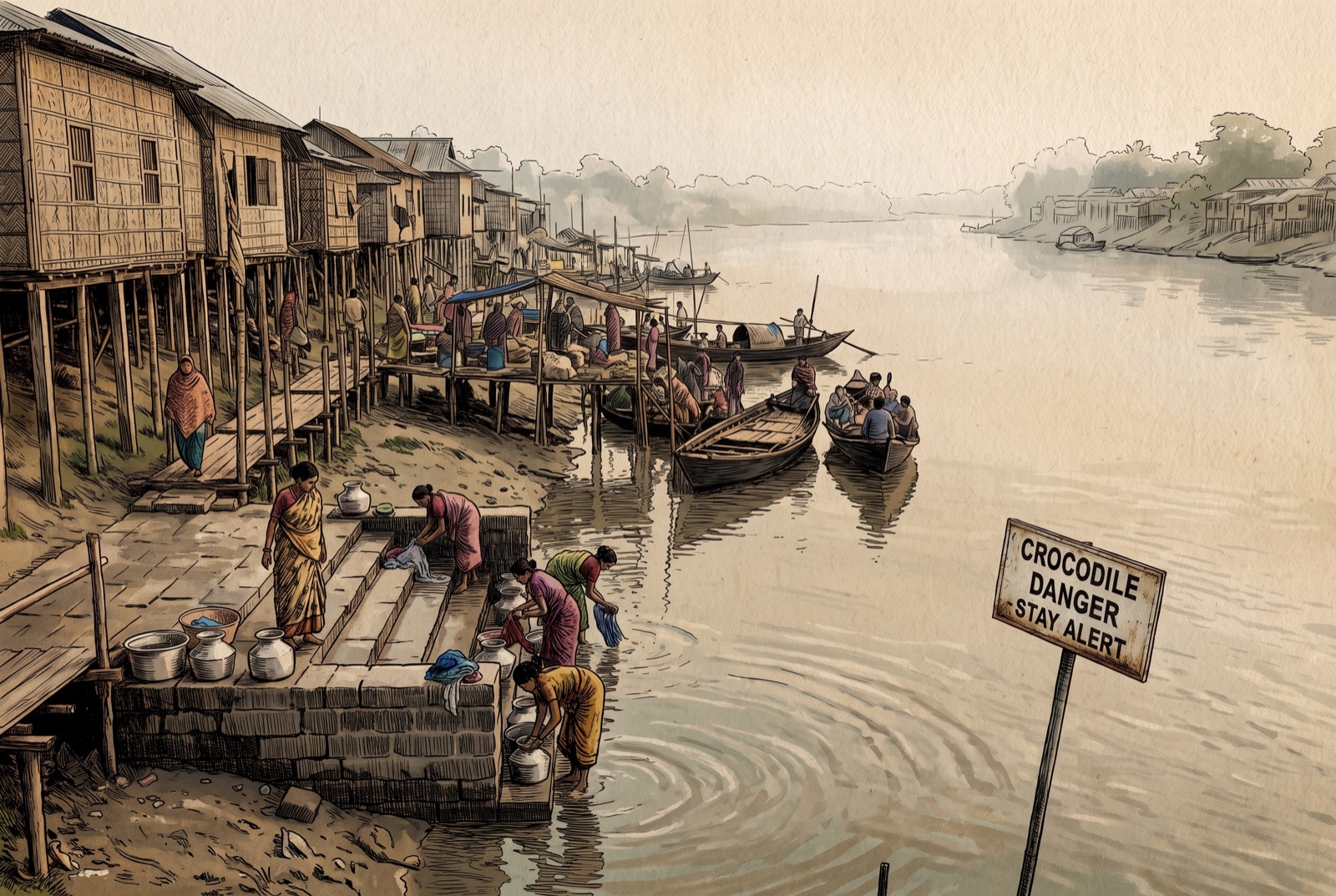
Now the assessment. One case at a time, and the question asked of each is not only what the person did in the last few seconds, because in most of these the person did nothing at all. The question is what decisions had already been made before anyone walked down to that water. Who did not put up a sign. Who fed a crocodile at a lookout for two years. Who cut a channel from a river into a village. Who left several thousand flooded holes in the ground and walked away from them.
The four Australian cases
Plumwood
She named her own errors and she named them harder than anyone else has: alone, in rain, on the first day of the monsoon, in water she knew held crocodiles. Fine. But she was out there in a park-issued canoe doing a park job, scouting a trail, and the thing that changed afterwards was institutional rather than personal. Parks recalled the canoes. That tells you the agency had already read the risk the same way she did, in hindsight. The part of her account this book leans on hardest is the part people skip, which is that gouging the eyes of a crocodile that has hold of you did nothing measurable, and it let her go each time of its own accord. You almost certainly will not fight your way out. If the animal shifts its grip, that split second is the only chance there is, so take it. Just do not go into the water believing you have a technique.
Von Jordan
This is the case in these chapters where wilful ignorance shows plainest, and it was not the victim's. Nine clients on the last night of a tour, at half past ten, at a billabong signposted against exactly what happened. The coroner found the guide suggested it and induced them, and then left them in the water to go and talk to somebody. A twenty-three-year-old on a four-day tour has no way to overrule the person whose job is knowing which water is safe. She had survived the Sari Club ten days before.
The system failures around it are more interesting than the individual one. The coroner found the Territory's signage genuinely confusing, and his example was Jim Jim Falls, which carries near-identical warnings at a place where swimming is sanctioned. Teach people that the same sign means two different things and you have taught them that signs are negotiable. He asked for statutory licensing of Territory tour guides. It never came. Accreditation today is voluntary, and that is a decision made by nobody in particular over twenty-two years.
Goodsell
Four children and no adult, at a creek in flood, in the wet season, in country that recolonises with crocodiles off the floodplain every single year. Blame does not attach to an eleven-year-old. It does not really attach to the adults either, and the reason is printed on the sign that was standing there: "Access by Permit Only," and not one word about crocodiles. Not one word. Then the adults who saw that creek said they would not have gone in, and every one of them said it because of drowning. That is what the education gap looks like from the inside. A whole community reading the correct hazard and the wrong one at the same time.
Free preview
Own the whole book — $4.99
You’re reading the free preview of Croc & Gator Wise: The American Edition. 42 more sections are in this chapter — unlock the full field guide to keep reading.
- The complete master — both the American and Australian editions
- Reads on any device · adds to your home screen like an app
- One-time purchase · lifetime access
A Citadel Culebra field safety guide · Vivarium Culebra LLC