
4 · Page 27 of 364
Where They Live — and Why Clear Water Is Not Safe
Habitat, and what people get dangerously wrong about it
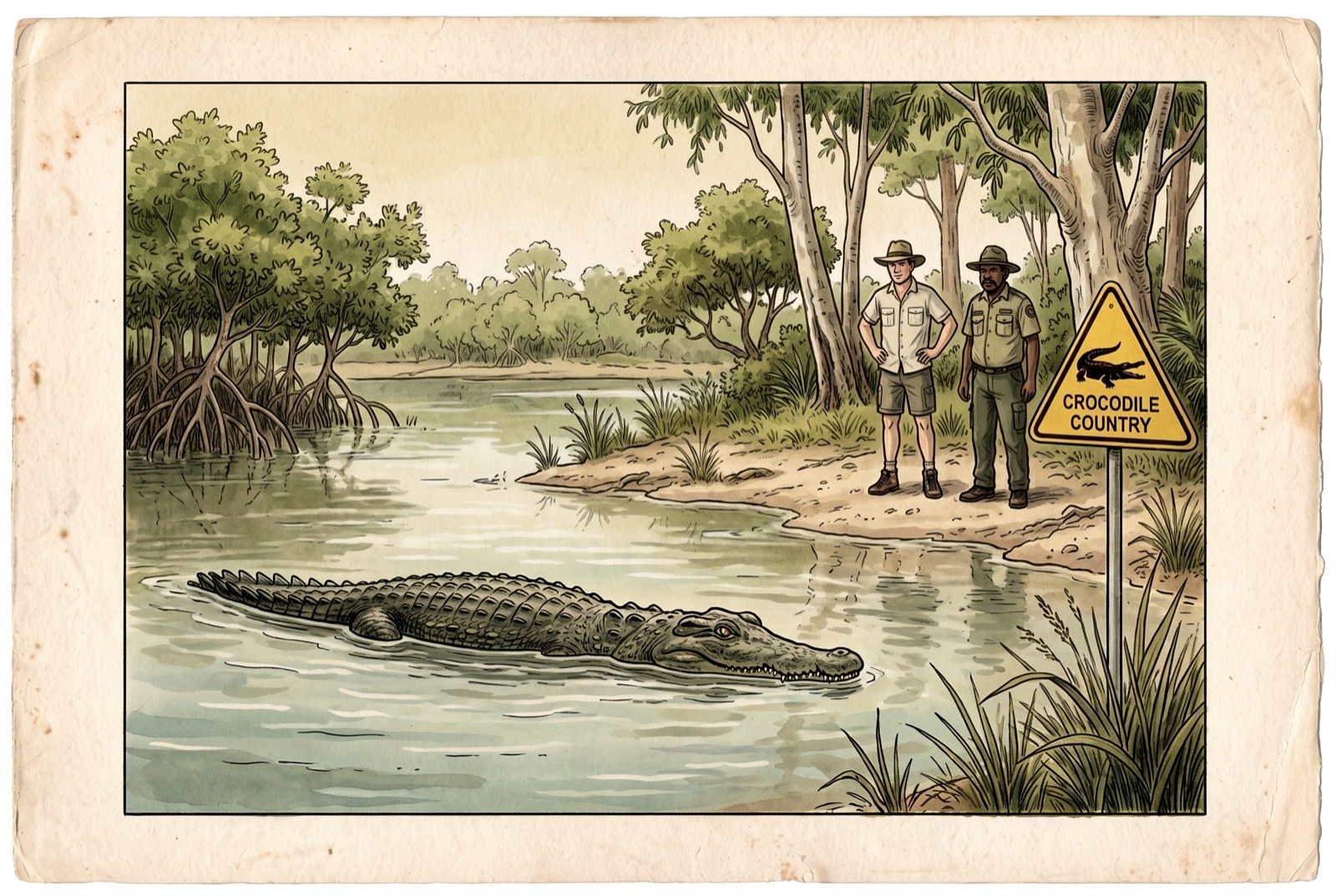
The saltwater crocodile lives across an enormous range of water, and it is the same range everywhere it is found: tidal rivers and mangrove estuaries, the open coast and the sea itself, billabongs and swamps, freshwater creeks and floodplains. Then the man-made kind: farm dams, drains and culverts, boat ramps, harbours and marina channels. From the Top End to the deltas of the Bay of Bengal, if it holds water for much of the year in crocodile country, treat it as possible crocodile habitat, no matter how tame it looks.
Which brings us to a belief about that water that gets people killed. Everyone learns, correctly, that crocodiles hide in murky water, and then draws a fatal false conclusion from that true fact: that clear water is safe. It is not. A crocodile in clear water is exactly as present and exactly as capable as one in a muddy river, and thanks to its underwater vision and its goggle-like third eyelid it can see you far better than you can see it. Some of the Top End’s prettiest, clearest waterholes have held big saltwater crocodiles, and so have spring-clear pools far up the rivers of Borneo and New Guinea. Clarity tells you nothing about whether the water is occupied. Unless it is a managed, signposted swimming area, assume a crocodile is in it. Clear water only means you might get a slightly better look at the one that was there the whole time.
Free preview
Own the whole book — $4.99
You’re reading the free preview of Croc & Gator Wise: The American Edition. 6 more sections are in this chapter — unlock the full field guide to keep reading.
- The complete master — both the American and Australian editions
- Reads on any device · adds to your home screen like an app
- One-time purchase · lifetime access
A Citadel Culebra field safety guide · Vivarium Culebra LLC