5 · Page 32 of 364
The Perfect Ambush Predator
The anatomy of the ultimate predator
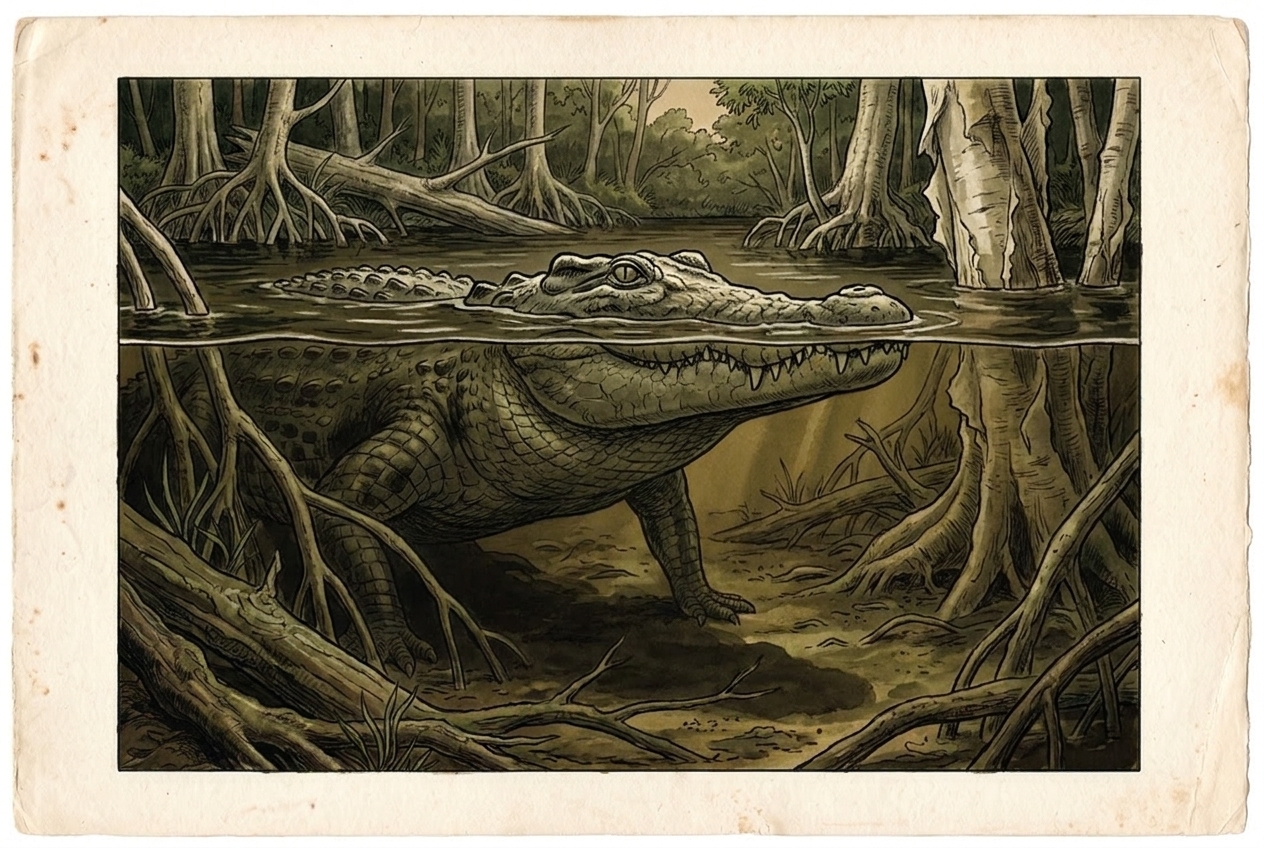
To be truly croc wise, and to genuinely respect this animal, you have to understand how it perceives the world. The deeper that understanding goes, the more you respect the animal, the more you want it protected, and the more safely you can move through its country. Forget the cartoon and forget the trophy. What you are dealing with is a machine: eighty million years of refinement into possibly the most efficient ambush predator that has ever lived. When you understand the saltwater crocodile’s anatomy, two things happen at once. You stop underestimating it, and you start to feel something close to awe. Both are what keep you alive, and both are what make you want to protect it. This chapter is the one to read slowly. Everything else in the book makes more sense once you know what you are dealing with.
And understand this first: it is one animal. The saltie lying off a Sundarbans mudbank where a fisher is wading and the one floating in a Kakadu billabong are the same machine, bolt for bolt, the whole way from the east coast of India to the Solomon Islands. Bolt for bolt. Learn the animal here, once, and you have learned it everywhere it lives; what shifts from coast to coast is only how often it and people end up in the same water.
The umwelt: the water as the crocodile senses it
There is a German word, coined by the biologist Jakob von Uexküll, to carry with you onto every tidal creek and flooded paddy the crocodile lives on: umwelt. It means the world as an animal actually senses it. Not the world. The world its own senses build for it. You cannot be safe around a saltwater crocodile, still less live alongside it, until you understand its umwelt: how it senses the water, rather than how the creek looks to you. Learn to read the water the way the animal reads it, and that is what lets you move through its country safely and share it for a lifetime.
Set through the skin around its jaws are thousands of tiny dome-shaped pressure receptors, sensors so fine that they register the faintest disturbance in the water. Thousands of them. To the animal a ripple is not noise; it is a message. Long before you can pick anything out on the surface of a murky tidal river, the saltie has already felt you, measured you and begun reading you, while it stays, to your eyes, completely invisible.
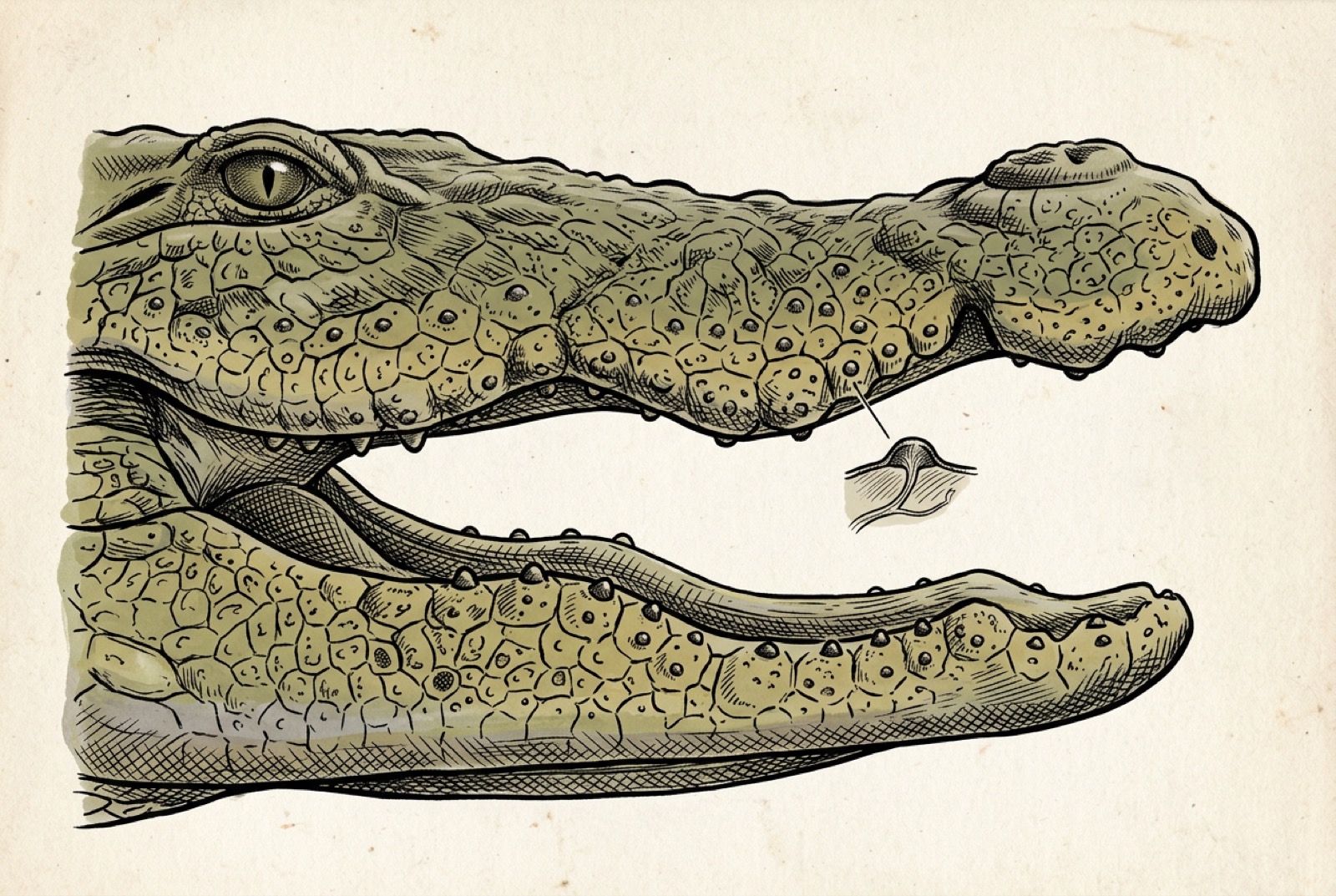
This is precisely why the surface, the shallows and the murk are where the danger concentrates. The moment you enter the water, every splash, every kick, every stroke of a limb near the surface broadcasts exactly the low, irregular pulse of a struggling, wounded or drowning animal. That is one of the most compelling signals in a crocodile's world. Wading carefully does not make you quiet. To those sensors, easing into a creek to cool off, or working a net at the edge of a billabong, you are ringing a dinner bell. Your very caution reads as prey.
Free preview
Own the whole book — $4.99
You’re reading the free preview of Croc & Gator Wise: The American Edition. 39 more sections are in this chapter — unlock the full field guide to keep reading.
- The complete master — both the American and Australian editions
- Reads on any device · adds to your home screen like an app
- One-time purchase · lifetime access
A Citadel Culebra field safety guide · Vivarium Culebra LLC