
10 · Page 83 of 219
The Dangerous Seasons: Courtship, Nests and Hatchlings
Why breeding and nesting time is when people get hurt
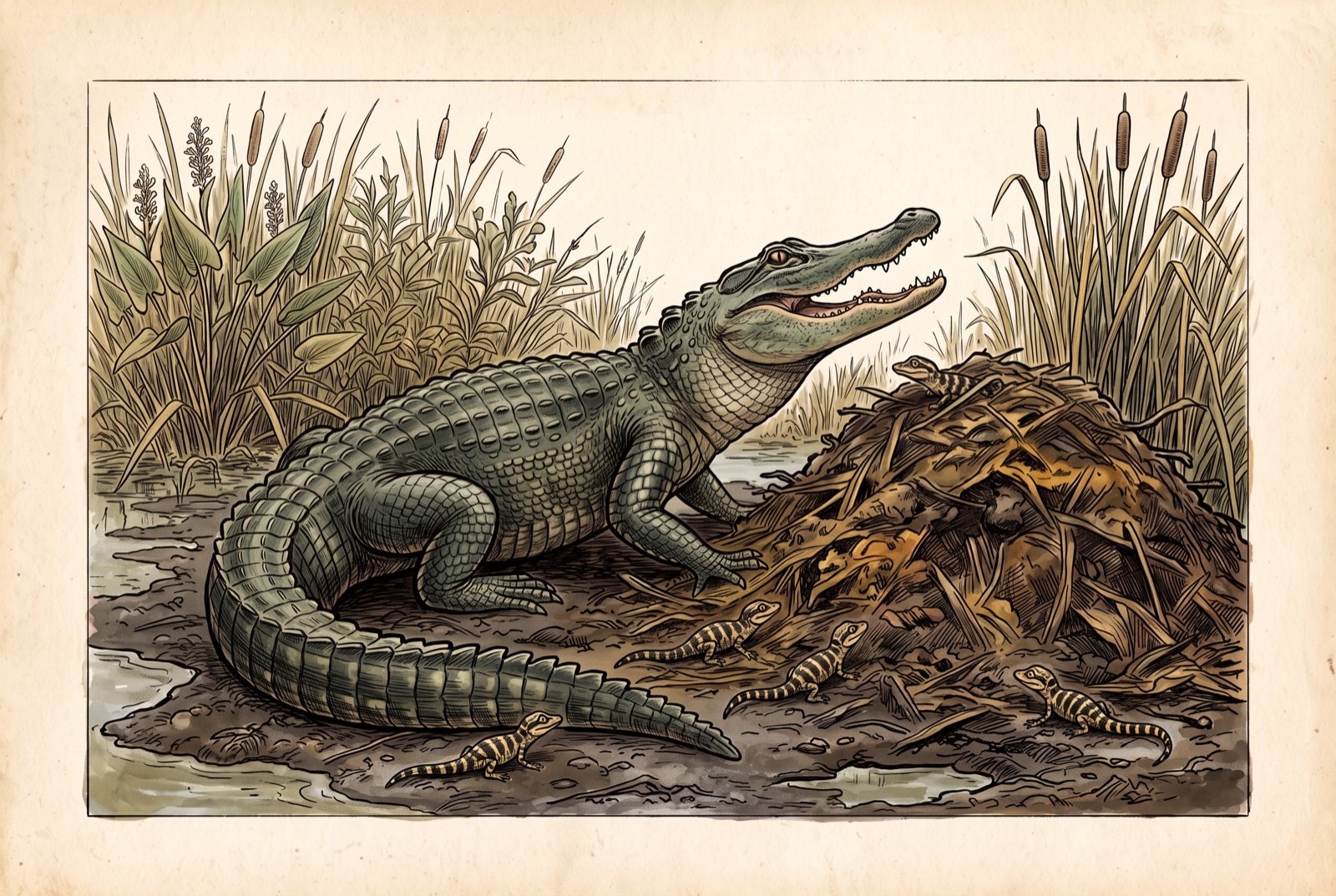
You can share a landscape with these animals safely, but never carelessly, and never with your body in their water. And there are weeks of the year when they turn markedly more dangerous, so it pays to know when. Spring, mostly. For the American alligator, courtship builds through April and mating runs into May and June. Males roam far beyond their usual haunts (a breeding male may cover a range of over a thousand acres), bellowing, competing, and turning territorial and short-tempered. There are simply more large animals, on the move, in more places, than at any other time of year, including places they were not a month ago.
Then come the nests. A female builds a mound of soil and vegetation, often three feet high and five across, and lays thirty to fifty eggs in late June or July; they hatch from August into September. Through all of it she is transformed. The same animal that spends most of the year avoiding people will guard her nest and her hatchlings ferociously, staying within a few feet, hissing, gaping, and willing to charge an intruder in a way she never otherwise would. Where you see a baby alligator or crocodile, assume the mother is close and watching. A hatchling can absolutely be a photo, from a safe distance. Read it for what it also is: a sign that a larger, fiercely defensive mother is somewhere very close. Get your shot from well back, then move away from the water. A nesting or guarding female is as dangerous as anything you can come across, and she stays that way well after the eggs have hatched.
The practical response is simple. In breeding and nesting season, give every waterway a wider berth than usual; never, ever approach a nest, a mound, or a hatchling; and expect to meet animals in places (roadsides, yards, ponds, driveways) where there were none the month before. She is making her next generation. Nothing personal. Like any mother anywhere, she will defend her young as fiercely as she can. Respect that, and keep a wider distance right through these months.
The American crocodile’s calendar
The American crocodile runs on a slightly different clock, and it pays to know it if you spend time on the coasts it inhabits, from south Florida down through Mexico and Central America. It courts and mates through the late dry season, roughly February into April, and the females nest as the rains arrive, digging a hole in a sandy bank or building a mound above the tide line, and laying through April and May so the young hatch into the wet season, from July onward. Two things follow for anyone near the water. First, a nesting female crocodile guards her clutch, and though she is generally far shyer than a nesting alligator, she is still an animal you must never test; give any bank with a disturbed mound or a scrape a wide berth. Second, the timing lines up with the danger that took Irving Mauricio: as the rains begin, the estuaries swell, the waterways connect, and crocodiles move: along the coast, onto the beaches, and into channels and lagoons they were not in a month before. Water connects. The start of the wet season is exactly when a resort beach can quietly become occupied.
When the water moves them: floods and hurricanes
Nothing rearranges the map of danger faster than a lot of water arriving at once. Heavy rain, a river in flood, or a hurricane’s storm surge does two things at the same time: it connects bodies of water that were separate, giving crocodilians highways into places they could not previously reach; and it lifts the animals out of their usual haunts and carries them across the landscape. After a big storm in the American South, alligators turn up in flooded streets, swimming pools, garages, drainage ditches, retention ponds and yards, sometimes miles from any water they are supposed to be in. A creek or ditch that has been dry or gator-free for months can hold a large animal within a day of a flood. Storm surge along the coast can push both alligators and American crocodiles inland and scatter them through neighborhoods, and the receding water can strand them in places no one expects. The rule for the days and weeks after any major flood or hurricane is simple and firm: treat every body of water, and every patch of standing floodwater, as newly occupied. Check before letting children or pets near any water, keep well back from swollen creeks and canals, and assume that the flood has moved the animals, because it has.