11 · Page 88 of 219
Myths That Get People Killed
The dangerous things people believe
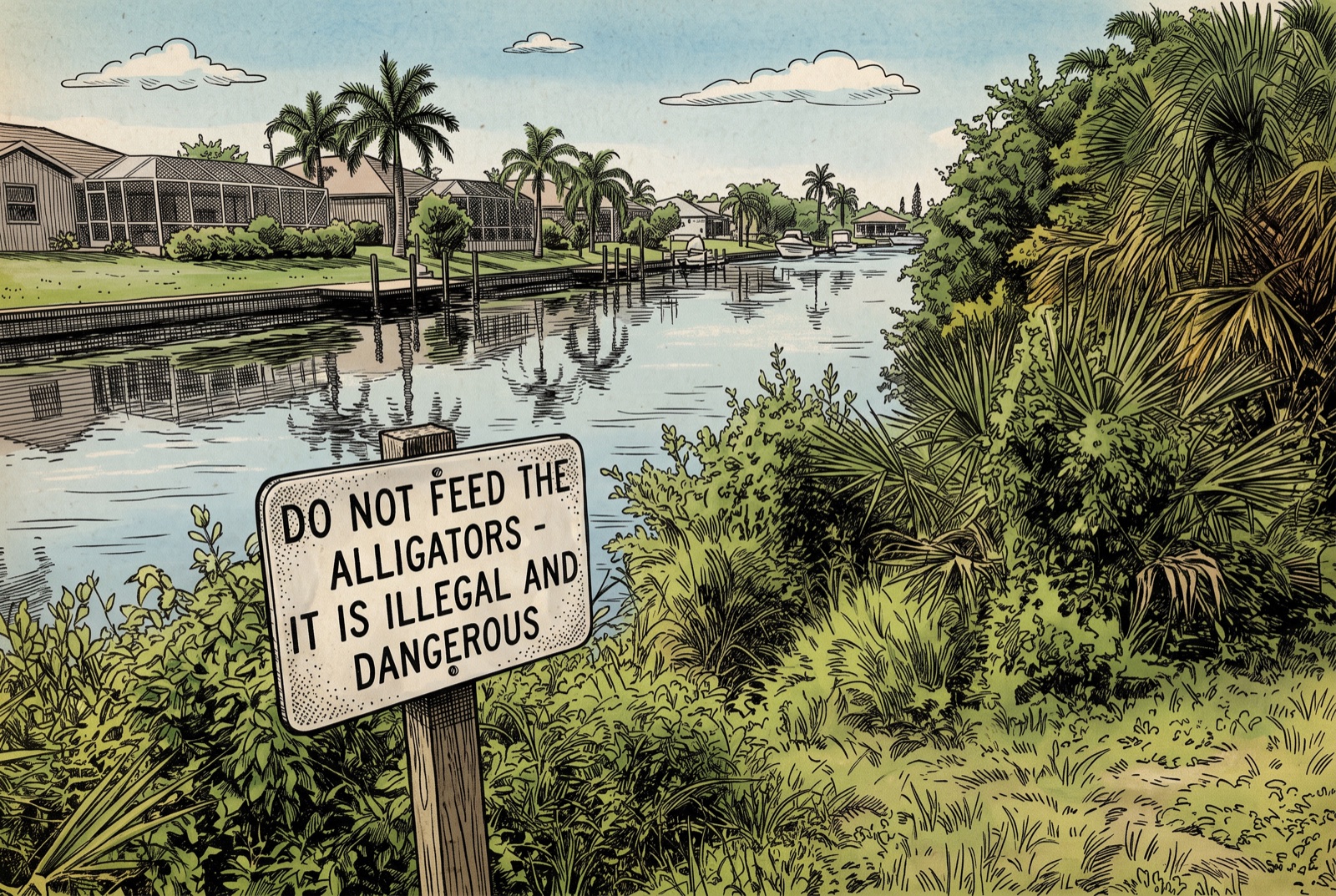
Misinformation kills in crocodilian country, because a false belief feels exactly like a true one right up until the moment it fails. Before we get to the rules of behavior, we should dismantle the myths that lead good, sensible people to make fatal choices. All of them. Each of these is believed sincerely by someone every year, and each is wrong.
“I’ll see it before it gets me.”
You will not. This belief is a killer, because it feels so reasonable. But the entire evolutionary design of crocodilians is built around being invisible until the instant of the strike. One will float with only nostrils and eyes above the surface, or fully submerged, in water too murky to see into. The attack comes from below and from the edge, explosively, at a range of a yard or two. By the time you could possibly see it, the decision has already been made for you. Vigilance is good, but it is not a substitute for staying out of the water.
“The water’s clear, so I can see there’s nothing there.”
Clear water is not empty water. A crocodilian can lie motionless on the bottom, tucked against a bank, under an overhang, or behind submerged timber. Clarity also changes hour to hour with tide and rain. Hour to hour. The clearness of a pool tells you nothing reliable about whether an animal is in it or about to enter it.
“It’s just a pond. There aren’t gators in there.”
People assume alligators only live in “real” wild swamps and big lakes, not in the ordinary water near where they live. They do. Alligators turn up, and breed, in golf-course ponds, retention basins, drainage canals, neighborhood lakes and backyard ponds all across the South, and they move overland between them, especially in spring. A small, tame-looking pond is not proof of safety; it is exactly the kind of water where people are caught off guard.
“We’ve always swum here.”
History is not protection. A spot that has been used for years can hold a crocodilian that arrived last week, last night, or with the last flood. Crocodilians are highly mobile, especially after heavy rain, and a place’s safe reputation is built on luck that can run out at any moment. Several of the deaths in this book happened at locations people considered “their” swimming spot.
“It’s only small / only shallow.”
A small crocodilian can still cause serious injury, and a large crocodilian can hide in shockingly shallow water, as little as ten inches. Ten inches of water. “Only shallow” often describes the exact conditions in which an ambush happens, not conditions that prevent one.
“I can outswim it / outrun it.”
Not in the water. A large crocodilian is vastly faster and more powerful in its element than any human swimmer: a big one swims at close to twenty miles an hour, and people who have tried to swim clear of one almost never make it. On land, over the very short distance of an ambush, a crocodilian can also move faster than people expect. The plan is never to escape an attack. The plan is to never be in a position to be attacked.
“The rangers trapped this area, so it’s clear.”
Trapping reduces risk; it does not eliminate it. Removed crocodilians are replaced as others move in, particularly each wet season. Management makes designated areas safer, but only a signposted, currently-open safe-swimming area carries that assurance, and even then, as the authorities themselves say, it is never one hundred percent guaranteed in truly wild water.
Replace every myth with one true sentence
I cannot tell by looking whether the water is safe, so I only enter water that is signposted as a designated safe swimming area. Everything else, I stay out of.
“It’s only an alligator. They don’t really attack people.”
This myth has killed people in gator country, and it is a cousin of every myth in this chapter. It is true that alligators, on average, are more wary of people than the big crocodiles. That is a comparison between crocodilians, not a clean bill of health. More placid than a saltwater crocodile does not mean placid, and it certainly does not mean safe for an ordinary person to be near. That average is exactly the trap: it lulls people into swimming in natural lakes and rivers, letting children and dogs play at the edge, and wading at dusk, as though a large alligator were harmless. It is not. It is a powerful ambush predator that kills the same way its crocodile cousins do, in the same shallow, calm, familiar water. “It’s only a gator” has cost lives; you will read about some of them at the end of this book. Give an alligator the same respect and distance you would give any crocodile. Different animal; identical rule.