
15 · Page 122 of 219
If You Live in Crocodilian Country
Making croc-wise a way of life, not a holiday rule
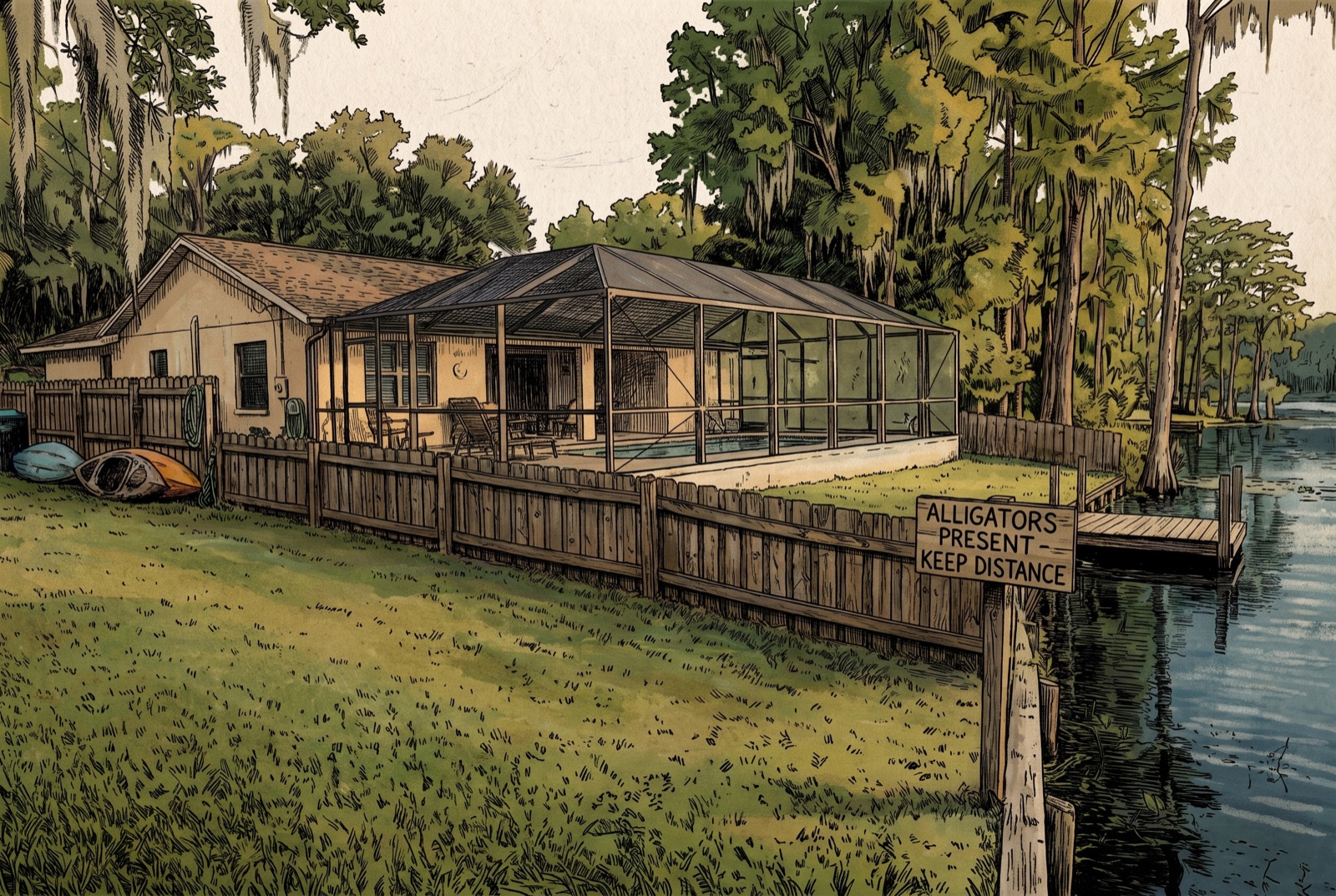
Visitors pass through; residents live with these animals every day, and that brings its own challenge. For people who live in gator or crocodile country the danger is rarely ignorance. It is familiarity. When you see the same lake or canal every day and nothing happens for years, the rules can start to feel like someone else’s problem. The tragic truth, written into case after case, is that many victims were locals who knew the water well. Knowing a stretch of water tells you what it was like last time. It does not tell you what is in it today.
Build the habits into daily life
- Treat your local waterways with the same discipline you’d want a visitor to use. The creek behind the house, the local boat ramp, the favorite fishing bank: all of it deserves the full set of rules, every time, no matter how many uneventful years have passed.
- Watch the seasons on your own patch. Know when your nearest waters flood and connect, and treat the wet season as a time when crocodilians can appear in places that were dry or clear for months.
- Keep your property’s water margins in mind. Farm dams, drains and low ground can hold crocodilians after big rains. Check before letting children or pets near any water on rural blocks following floods.
- Manage food and waste. Don’t dispose of fish frames, food scraps or animal carcasses in or beside local water. A community that feeds crocodilians, even accidentally, trains them to associate people with food.
Look after the newcomers and the young
Residents carry a responsibility beyond their own safety: they set the example and pass on the knowledge. New arrivals, visiting friends and family, backpackers and overseas workers often have no instinct for this danger and will take their cues from how locals behave. None at all. If they see you stand back from the edge and obey the signs, they’ll learn the right lesson. If they see you stroll to the water’s edge because “it’s fine,” they may copy a habit that gets them killed. The same goes for children growing up in the region, who must be taught the rules early and consistently, which is the subject of the next chapter. And a word to the visitors themselves: listen to the locals. If someone who knows that water tells you not to go in, treat it as the final word; they have seen things you have not. The one caution runs the other way: if a local is urging you to do something that feels reckless, and there is no official sign declaring the water a safe swimming area, do not take that encouragement. Not everyone offering advice is careful, and the real signals, proper signage, the state of the water, the season, count for far more than any one person’s reassurance. When in doubt, err toward staying out.
Be part of the system
Living well in gator and crocodile country means being an active part of the safety culture, not a passive beneficiary of it. When an alligator or crocodile turns up where people are, a neighborhood pond, a canal, a park, report it to the wildlife authorities; these are not “problem animals,” just animals that have wandered somewhere they cannot safely stay. Out in remote country the job is different: there is no one to call, so the responsibility is simply to know where you are and keep well clear of the water. Support and respect the agencies, licensed trappers and officers whose work keeps both people and animals safe. It is hard work. Talk about close calls openly so others learn from them. Reinforce the rules with neighbors and newcomers rather than rolling your eyes at them. The croc-wise community is the one that keeps its members alive, and keeps the animals too, by making coexistence work.
Crocodilians don’t care how long you’ve lived here. Every safe year is a habit you kept, not a guarantee you earned.