
16 · Page 127 of 219
Raising Croc-Wise Kids
Teaching children the one lesson that has to stick
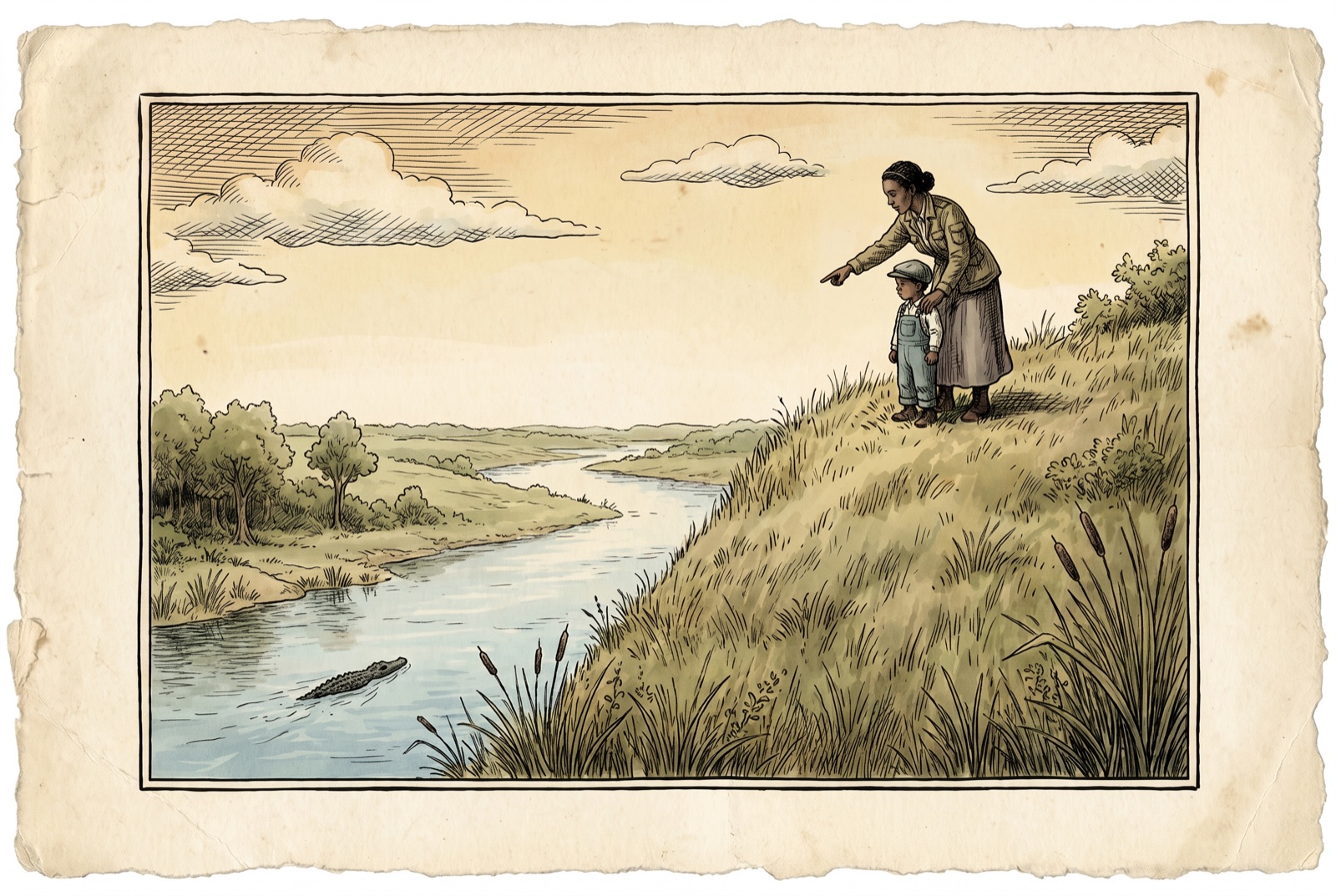
Children are, heartbreakingly, over-represented in the history of crocodilian tragedy, and the reasons are no mystery. A child is smaller and more easily taken. A child is drawn to water and to play. And children do not always appreciate dangers that adults can see plainly. Not their fault. A child looks at a creek and sees the swimming hole they know. An adult looks at that same creek after a week of rain, sees it swollen and moving, and would not put a foot in it. Same water. Two completely different readings of it. Adults see things children cannot. And that gap, between a place you have decided is fine because nothing has ever happened there and a place a child has decided is fine because it looks like fun, is exactly the gap this chapter is trying to close.
Make the rule simple, absolute and unbreakable
Children cope far better with one clear, non-negotiable rule than with a careful risk assessment. Rules, not judgement calls. The rule for crocodilian country is beautifully simple, and it should be taught with the same finality as “never run onto the road.”
The kids’ rule
Never go near the water unless a grown-up says it is safe and there is a safe-swimming sign. Every creek, river, backwater and puddle in croc country might have a crocodilian in it, even if you can’t see one, even if you swam there before.
How to teach it so it lasts
- Teach the “we can’t see them” idea directly. Children imagine danger as something visible. Explain, clearly and calmly, that crocodilians are champion hiders, that the whole point of a crocodilian is that you cannot see it, so “I looked and there wasn’t one” is never a reason to go in.
- Kill the “last time was fine” logic. Make sure children understand that water changes, especially after rain, and that a spot being safe before does not make it safe now.
- Practice spotting the signs together. Turn warning signs into something the child notices and reads aloud. Make obeying them a point of pride, not a restriction.
- Supervise actively, always, near any natural water, which means watching, not glancing up from a phone. Decide in advance who is watching the children at all times.
- Model the behavior yourself. Children copy what adults do far more than what adults say. If you stand back from the edge and obey the signs, so will they.
- Use the heroes. Many children adore Steve Irwin and his family. Frame being croc wise as being a real Wildlife Warrior: someone who respects crocodilians, keeps a safe distance, and helps protect them. Safety and conservation become the same exciting story.
None of this needs to frighten a child into hating the outdoors. Quite the opposite. The goal is a child who is confident and joyful outdoors precisely because the safety rules are second nature, the way a road-sense child happily walks to school without once thinking about it, because the looking-both-ways went in years ago and now just runs quietly in the background. Respect, not terror, is what we are building.